
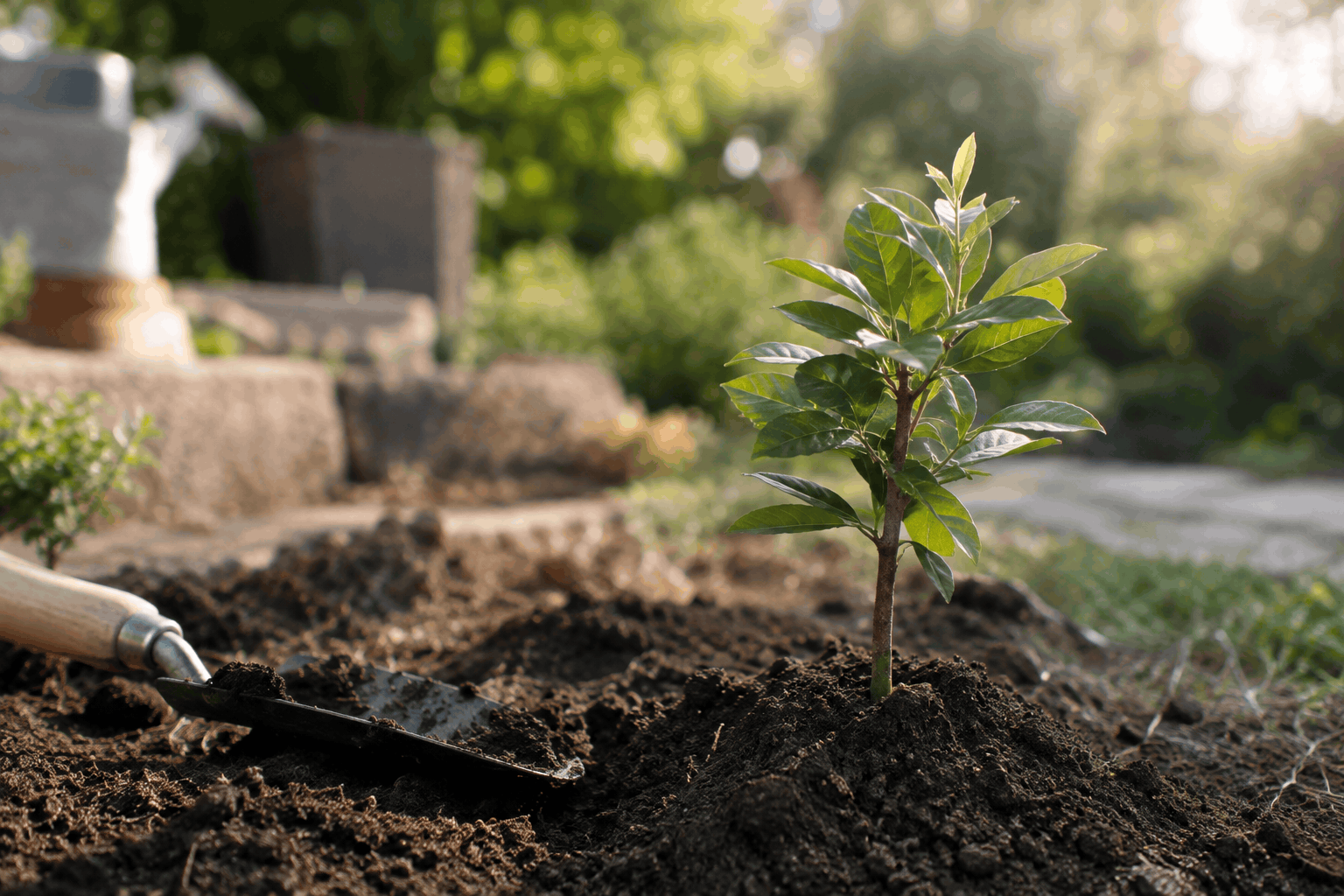
For generations, most California families have faced the same two choices when a loved one dies: a casket in a cemetery or an urn of ashes. Those traditions still serve many people well. More and more of the people I speak with, however, describe a different wish. They want their final act to give something back, to become part of a garden, a tree, or the land they loved.
That wish now has a legal name and a firm date. California has passed a law allowing human composting, but the law and the reality on the ground do not arrive at the same moment, and that gap is where families get confused. Many are unsure whether the option exists yet, what it costs, or whether their family will even know they wanted it.
I am Jolene Blackbourn, a California estate planning attorney and a licensed funeral planner. This guide explains what California law says about human composting, how the process works, what it costs today, and how to make sure your choice is honored.
What Is Human Composting?
Human composting is the process of gently transforming a human body into soil. Its legal name is natural organic reduction; California law simply calls it “reduction,” and some providers use the term terramation. The idea behind every label is the same: the body returns to the earth through the natural decomposition that takes place on a forest floor, only faster and inside a controlled, monitored environment.
When people ask what human composting is, they sometimes picture something casual. It is not. The process ends with roughly one cubic yard of soil, about enough to fill the bed of a pickup truck, and it is regulated as closely as cremation.
Is Human Composting Legal in California?
Yes, with an important caveat about timing. Governor Newsom signed Assembly Bill 351 in September 2022, and human composting in California becomes legal on January 1, 2027. Until then, no facility in the state may perform it.
Washington led the way in 2019, and a growing list of states has followed. California deliberately delayed its start date to give regulators time to build the licensing and safety framework first.
What AB 351 Requires
The law treats reduction facilities much like crematories and water cremation facilities. Under AB 351:
- The Cemetery and Funeral Bureau licenses and regulates every reduction facility and its manager.
- The California Department of Public Health sets standards for reduction chambers so that harmful microorganisms are destroyed.
- A local registrar must issue a permit before reduced human remains reach their final location.
The law also keeps each person’s remains separate. Without written permission from the person in charge of the remains, a facility may not reduce two people together or mix their soil, although family members may share a container designed for more than one person. Mishandling reduced human remains carries penalties, just as it does for cremated remains.
Why In-State Facilities May Open After January 2027
January 1, 2027 is the earliest date a facility can be licensed, not the date one will be ready to serve families. The Bureau cannot accept applications before then, and an operator also needs local zoning approval, vessel approval from the Department of Public Health, and generally an inspection.
The Bureau’s own regulations were still moving through state approval in mid-2026. Because each step takes time, some providers expect the first California facilities to open in 2028 or later.
How the Human Composting Process Works
Each provider uses its own equipment, but the human composting process follows the same basic path:
- Preparation. The body is washed and kept in cold storage, without embalming, until the ceremony and placement.
- Placement in a vessel. The body rests in a reusable vessel with natural materials such as wood chips, alfalfa, and straw.
- Transformation. Microbes break down the body while heat builds and the contents are aerated. This stage usually lasts about 30 to 45 days.
- Processing. Medical implants and other non-organic materials are removed, and many providers recycle the metals.
- Curing. The soil rests for several more weeks before it is released.
From start to finish, many providers quote about two to three months. Families often ask what happens to the bones in human composting. Bones and teeth do not fully break down on their own, so they are mechanically reduced to fine particles and mixed back into the soil, much as bone fragments are processed after cremation.
Who May Not Be Eligible
Because the process depends on natural decomposition, an embalmed body cannot be composted. A family that defaults to embalming may close this door without realizing it, which is one reason written instructions matter.
Facilities in other states also decline certain cases, and California’s final rules are expected to set the state’s own list. Common exclusions include:
- Prion diseases, such as Creutzfeldt-Jakob disease
- Ebola and active tuberculosis
- Recent radioactive treatments, such as seed implants used in some cancer care
Human Composting vs. Cremation vs. Burial
For most families, the choice comes down to cost, timing, and personal values. The human composting vs. cremation question is usually where families start, so the table below adds traditional burial for a complete picture.
| What to Compare | Human Composting | Flame Cremation | Traditional Burial |
| Available in California now? | Legal from January 1, 2027; out-of-state facilities only for now | Yes | Yes |
| Typical timeline | About 2 to 3 months, including curing | Days to a few weeks | Days to a few weeks |
| Typical cost | About $5,000 to $7,000 out of state, plus transport | About $1,000 to $4,000 | $9,000 to $15,000 or more |
| What your family receives | About one cubic yard of soil | Cremated remains (ashes) | A gravesite and marker |
| Environmental footprint | No embalming, casket, or combustion | Burns fuel and releases emissions | Uses land and a casket, often with a vault and embalming |
California also allows water cremation (alkaline hydrolysis), which is available today. For more on the two traditional options, read our guide to burial vs. cremation in California.
How Much Does Human Composting Cost?
With no California facility open yet, the human composting cost for a Californian is set by out-of-state providers. One 2024 report described a Southern California package at $6,950, plus about $410 in air freight to ship the body to Seattle.
Beyond the service itself, your total depends on:
- Transport from California and preparing an unembalmed body for travel
- A ceremony before the body is placed in the vessel
- Soil delivery, death certificates, and permits
Prices change, so request a current written price list before signing. Local facilities should eventually reduce transport costs, but in-state prices are not yet known.
Can Californians Choose Human Composting Before 2027?
Yes. Californians already choose it by using a facility in a state where the process is legal, and Washington providers report steady business from California families. A California funeral home typically collects the body, handles the permits, and arranges transport by air or by vehicle. The out-of-state facility then performs the process and returns the soil or places it on conservation land.
Several providers sell prepaid plans to out-of-state clients and arrange transport for an added fee. If you buy one, confirm in writing what it covers if you die before a California facility opens, and what happens to the plan once one does.
What Happens to the Soil?
For many families, this is the most meaningful part of the decision. Under California law, the person in charge of the reduced human remains chooses to:
- Receive all of the soil, in one or more containers
- Receive part of the soil, with the rest placed by the facility in a conservation area
- Receive none of it, and let the facility place all of it in a conservation area
If the family does not take all of the soil, the facility must tell them where the conservation area is. Soil that no one claims within 90 days of the date of death may be placed there by the facility.
Families who keep the soil often use it to nourish a tree or garden, bury it in a cemetery, or set aside a small portion as a keepsake. Trespass laws still apply, so placing soil on land your family does not own requires the owner’s permission.
How to Plan for Human Composting Today
Over the years, I have watched families do everything right with their wills and trusts and still feel overwhelmed after a death, making fast and expensive decisions about a funeral no one had planned. Human composting adds to that pressure because it is new and may require out-of-state arrangements. A clear plan turns your wish into instructions:
- Put your choice in writing and share it. California law allows you to direct the disposition of your remains in writing. Give copies to your agent and family, because a will is usually read after final arrangements are made.
- Name an agent you trust. Under California Health and Safety Code Section 7100, an agent named in a power of attorney for health care has the first right to decide, unless you have left your own written directions. Without one, the decision passes to relatives in an order set by law, starting with a spouse or registered domestic partner. You can name this agent in your advance health care directive.
- Choose a backup method. If composting is not yet available locally or you turn out to be ineligible, state what you want instead, such as water cremation.
- Address payment. Mortuaries generally expect payment upfront, and your family may not be able to reach your accounts quickly, so decide whether to prepay.
These steps belong in a complete funeral plan in California and work best when coordinated with your will and trust.
Make Sure Your Final Wish Is Honored
Choosing human composting is a deeply personal decision, but in California, a wish that exists only in conversation carries no legal weight. Until facilities open in the state, your family may also face out-of-state transport, extra permits, and choices they never expected to make while grieving.
A written disposition plan, a trusted agent with clear legal authority, and a backup option remove that uncertainty, so the people you love carry out your wishes instead of guessing at them.
- Transparent pricing: flat fees for legal documents, and funeral plan costs explained before you commit
- Fully virtual firm: everything handled from home, anywhere in California
- Attorney and licensed funeral planner: your legal documents and funeral plan prepared together, in one place
Let’s put your final wishes in writing. Schedule your free 30-minute consultation or call 818-473-5325 today.
One conversation now can spare your family difficult decisions later. Serving La Crescenta, Montrose, Tujunga, and Sunland, and families across California, virtually.
Frequently Asked Questions (FAQs)
| Question | Answer |
| Can my family choose human composting for me if I never put it in writing? | Yes. The person with the legal right to control your remains may choose any lawful method, so without written instructions, the choice rests on their judgment rather than yours. |
| Can there be a funeral or viewing before the body is composted? | Yes. Many providers offer a ceremony before placement in the vessel. Because the body is not embalmed, a viewing generally takes place sooner than with a traditional funeral. |
| Is the soil safe to use in a home garden? | The process generates enough heat to destroy harmful pathogens, and California requires public health standards for reduction chambers for that reason. Many families use the soil for trees and flowering plants. |
| Do religious traditions accept human composting? | Views differ. The California Catholic Conference opposed AB 351, while other traditions welcome the option. If faith matters to you, speak with your clergy and note any religious requirements in your plan. |
| What if I change my mind after putting my wishes in writing? | You can update your instructions at any time while you have capacity. If you prepaid a provider, review the contract’s cancellation and refund terms first. |
| Do I need an attorney to document my wish? | No, California does not require one. An attorney makes sure your agent, instructions, payment, and estate plan work together so no document contradicts another. |
